


 BENJAMIN CLABAULT
WHY YOUR FATHER DID WHAT HE DID
Partly it was because of me. No, I won’t blame myself. I was never in the wrong. But I did construct a sort of moral prison, from which he found a brutal escape.
I can see us now in our gas-powered Corolla, heading to that final protest in the Massachusetts college town where we’d stayed after school. I was five months pregnant, just starting to feel your little kicks like gas bubbles popping inside of me. And he—Max, your father—insisted that this time, no, he wouldn’t take a sign from the trunk, wouldn't stand there with me at the demonstration. He would go to the bookstore instead. I snapped, slapping the steering wheel. Don’t you realize what we’re fighting for? Don’t you see our democracy—no, more than our democracy, the morality of the world we inhabit—is at stake? He just stared at the windshield wipers as they squeaked across the glass.
By the time I joined the others on the Common, I’d forgotten all about him. My anger was directed elsewhere, at the president, at the sycophants in Congress, at the traitorous members of the newly formed Civil Defense Force. But now I can picture him, hands in jacket pockets, walking through the drizzle on East Pleasant Street. I can see it all through his eyes, think it through his mind. He was happy to be alone, relieved to be away from my incessant moralizing. Totality Books was just half a block ahead, and he could already smell the cleanness of the carpet and the freshness of the crisp, white pages. He wasn’t a bad person. He wasn’t indifferent to the suffering of others—all those kids in Africa with no medication, the separated immigrant families sleeping on cement detention-center floors. He just loved his life, an intellectual’s life, defined by the things he was thinking, and he thought he deserved to keep it.
Hand on metal door handle, a slight push, that lovely jingling of the bell, and there, there she was, behind the counter as always. Deirdre. Poofy hair. Sparkling dimples. Heart-shaped ring through the septum. He’d spent hours with her in the store. They’d talked about Middlemarch, about Heroclitus, about Achilles and the tortoise, about Poe, but it was only then, in the wake of my diatribe, that he realized how much he desired her.
“Hey,” she said through an open-mouthed smile, her tone clear and sweet.
He stopped short of hugging her, but they both knew he’d come close, that he’d forced himself not to reach for her across the glass countertop.
“How are ya?” he asked.
“Pretty good. Make yourself at home. We’ve got the place to ourselves.”
Max raised his eyebrows, and they both laughed.
As Max browsed, Deirdre sat flipping through a massive book at the front of the store. They’d retreated into private pursuits, but still angled their energies toward each other. Deirdre placed the book upright on the countertop, as if to make sure Max knew what it was, an anthology of modern poetry. And Max, each time he pulled a book from the shelf, held it in such a way that Deirdre could see the cover. After twenty minutes of this, he brought a single book—Cortázar's Famas and Cronopios—up to the register.
“You’re not getting A Manual for Manuel, too?” Deirdre asked.
“No. I gotta watch my spending. Between AI and the recession, no one’s hiring ‘content writers’ anymore.”
“I’ll be out of a job soon, too. They’re gonna shut the place down. Which sucks, because I was saving up to move away from my parents.”
“Jesus, I’m sorry.” Max wondered if she was waiting to be rescued. He imagined being able to rescue her. “Let me know if I can do anything. I mean, I don’t know what.”
Deirdre laughed. “I don’t know what, either. But that’s sweet of you.”
She handed him the little paper bag with the book and the receipt. As he grabbed the twine handle, their fingers touched, and they both left them that way. Simultaneously, they inhaled. They both felt the moment to be laden with potential. Then, to his credit, Max remembered my name. Just that—Sarah—the sound of my name. But it was enough. He pulled his hand away.
Three steps to the door, a pull on the handle, the jingling tinged with sadness—and then he realized: If the store closed, he would never see her again.
“Hey,” he said, coming back to the counter. “What’s your number? So we can stay in touch.”
Again, Deirdre’s smile, that toothy portal to the center of the world.
When he pulled out his phone to enter her number, he saw that I was calling. Annoyed—at the inconvenience, at the guilt—he sent the call to voicemail. Another call before he could finish typing Deirdre’s number, another annoyed dismissal. He patted her shoulder before leaving, as if my impertinence in calling had granted him the right.
“I’ll text you when I get back to the car,” he said, “so you’ll have my number, too.”
He didn’t bother returning my call as he walked back to the Corolla, where he figured he’d sit and wait for me to return. With his mind fixed on Deirdre, he didn’t even notice the residual sirens, the lingering screams.
“Jesus, what is it?” he said when he opened the passenger door and found me crying in the seat.
“They shot us,” I said. “With rubber bullets. They shot me and our baby.” I pulled up my shirt, showed him the welts covering the bulge above my midriff.
“Oh my God,” he said. “Are you okay? Is he okay?”
“I don’t know, Max. I don’t know if he’s okay.”
With a little yelp, Max rushed around the car, got into the driver’s seat, and sent the Corolla screaming off towards the hospital in Northampton.
We didn’t talk much on that drive. Now, I understand. He was doing some serious thinking. He’d look over at me every so often and smile. Sometimes, he even clasped my hand. There he'd been, flirting with a younger woman, while I’d been fighting for the future of our country. There he’d been, fantasizing about a future with Deirdre, while I’d be crying over the potential damage to you, our unborn son.
He held my hand there in the emergency room, before they conducted the ultrasound, before they confirmed that everything was okay. And then we slept that night like we hadn’t since before we were married, face-to-face with our arms firmly clasping.
In his penultimate moment of wakefulness, Max must have imagined Deirdre’s smile beneath her heart-shaped ring. He grabbed his phone off the nightstand, deleted her number, and then whacked her image from his mind.
The days of protesting were over—for our little group, and for everyone across the country. I still struggled every way I could, posting cryptic messages on social media, blasting Spanish-language music in my car, criticizing the president whenever it seemed safe, but the near-term opportunity for meaningful resistance had vanished. Brute power had won. I avoided depression by burrowing inward, our little house on Middle Street an internal exile, and my womb, ensconcing your beating heart, an even safer space. You were the country I could still protect, not with righteous anger but with a cultivated calm.
Sometime near the start of my third trimester, your father went back to Totality Books, telling himself, I’m sure, that it was just to buy that other book by Cortázar. He found the store closed. When he saw the darkness behind the glass, all those empty shelves, he was actually relieved. Battle, over. Deirdre, gone.
He spent hours each day on the computer, searching for a job. Despite his glumness, which had been increasing ever since our marriage, he’d do me all sorts of small kindnesses—foot massages, poetry readings, surprise waffles-and-ice-cream in bed. And he promised he was trying to get excited for your arrival, after admitting it was hard. I respected his honesty.
Usually during that time, he’d meet me at the car when I got home from teaching, carrying my book bag in. Until one day, he didn’t come, and only grunted hello from the couch when I pushed my way through the door. The house smelled strongly of cleaning products.
“I got a job,” he said when I sat down beside him. “For the Mobile Health Clinics. You know, the vans? They’re opening a branch in Springfield.”
“You’re working for the federal government? For this administration?”
“I knew you’d say that.”
“And how did you get it?”
“Hmm?”
“How did you get it? I thought you were sticking with writing or teaching gigs.”
“Oh, that girl from the bookstore. I’d mentioned I was out of work the last time I stopped in. Saw her this morning at Big Y. She’s got some connection, I don’t know. A single phone interview, and that was that. We start next week.”
At the time, I was startled by this spiel, presented without eye contact and heavy with forced nonchalance. Now, I can place it within the context of his emotionally turbulent day, which must have started, like every other, with humiliation at his joblessness and guilt at his stubborn ambivalence towards fatherhood. Then came the produce-section encounter with Deirdre, the surge of desire, the annoyance that he’d denied himself so much for so long. He admitted to her that he’d deleted her number, counting, as always, on the attractiveness of vulnerability, on the disarming power of an unexpected truth. The tactic worked. Deirdre was charmed by his fidelity and impressed that she’d been the one to threaten it. Remembering he was unemployed, she mentioned her new job and offered to call her uncle. Max’s position was confirmed right there beside the cantaloupe.
“Are you excited?” I finally asked, kicking my sandals from my swollen feet and sinking back into the couch cushions.
“Not really,” he said. “It’s a job.”
I knew even then that he was lying.
It was the night before Max’s first shift, before he was to drop me off at work and then drive Deirdre to their office, and neither of us was sleeping. He lay all the way across from me, as if my body and its bulge were toxic, his mind surely aflame with thoughts of Deirdre. Her smile. Her long legs in shorts and fishnet stockings. The girlishly round cheeks beneath the pronounced womanly brow. There was no denying it; the feeling went beyond desire. It was love.
Everything inside him, every instinct, told him to pursue that love. And yet, intellectually, he knew there was a sound rational argument for maintaining the integrity of our family. He’d read his Kant. He’d formed mature moral concepts. A world in which people betrayed their partners would be a world without nuclear families, in which children grew up in unstable homes. He wouldn’t be responsible for such a thing.
But God, how he hated that responsibility, the oppressive weight of it.
He reached over to the phone on the bedside table and saw it was almost two in the morning. He knew he had to sleep.
And so he forced himself to forget the whole conundrum, all those questions of “wrong” and “right.” He just imagined himself in bed with Deirdre. Soon after, he was snoring.
The next morning, Max pulled into my school’s bus loop and left me with a surprisingly determined kiss. Now, I see why. He was steeling himself, not for the cruelty of his new job, which he still couldn't have imagined, but for a non-adulterous encounter with Deirdre.
Less than five minutes later, he'd pulled into the driveway of her family's home, a squat, yellow ranch with a tire swing out front. When she emerged, she was almost unrecognizable. The poofy hair had been straightened, and her vaguely punk aesthetic was gone, obliterated by gray slacks, a black turtleneck, and a boxy teal blazer. As she pulled the passenger door open and sat down, Max saw that even the septum ring was missing.
"Hey, cutie," she said. With the new look, it seemed, came an even stronger sense of self-assurance. She filled the front of the Corolla like one half of the couple that owned it.
"Cutie!" Max said. "Haven't heard that one in a while! Here's that coffee I promised you."
"And here's your breakfast sandwich."
Max swooned at this exchange, at the fact they'd already established a little routine. She put the cup to her mouth and curled her lips around the edge. Max looked, and knew she wouldn't care if she saw him looking, knew she'd like it. He licked the inside of his own lips—and then he remembered me, that last kiss, his determination not to cheat. He put the car in reverse and pulled out of the driveway.
"You know, my wife's due date is just three weeks away." The words came out like slugs. It had felt like his duty to say them.
"And how are you feeling about that? Like, honestly?"
Max breathed deeply, his hand squirming over the steering wheel. Of course. Deirdre wouldn't feign excitement, wouldn't fall into banality. She'd shoot straight for the real, for the authentic. This, Max thought, was the poet in her, striving for something truer than small talk, than everyday life, than politics, even. There was a blazing hot mass at life’s center, something true and good; both he and Deirdre yearned for it.
"Honestly, I'm feeling unsure," he said.
"That seems perfectly normal to me."
"It is normal, I'm sure."
They drove along in silence, passing the verdant hump of Mount Sugarloaf, crossing the Connecticut River, merging onto the highway. When Max had finished his breakfast sandwich, he made quick eye contact with Deirdre and smiled.
"Thank you," he said. "For not insisting I’d grow to like fatherhood, for just letting what I said be."
"It’s because I don't know that you'll like fatherhood. I prefer not to say things that might not be true."
"I like that about you."
"I think that's why I'm done with politics," Deirdre continued. "All these people, like my parents, going to protests, claiming to know. I don't know. And so I'll just move through life as I can, doing whatever I do."
"I'm with you on that. I think that's why I have no problem taking this job. Is the administration bad? Yeah, probably. And even these Mobile Health Clinics—are they providing good medical care? Probably not. But maybe it's more cost-effective, and they’re using the savings for something else. We just don't know. Some people pretend to, but we don't."
"Besides," Deirdre added, "we both need the job. That much we do know."
"Yes, we know that for sure."
By now, they'd gotten off the highway and were waiting at a stoplight in Springfield.
"We're really similar," Deirdre said, rolling down the window, seeming to blossom in the late-spring air.
"We really are." Max turned to her. He smiled.
And then she leaned across and kissed him.
He jerked away—a reflex, all that Kant and social conditioning and maybe even some of my own moralizing, yanking his head backward.
"I'm sorry," he said. The light turned green.
Deirdre put her hand on his knee as he accelerated.
"Come over tonight," she said, softly, pleadingly. "My parents are away. We can talk about everything."
"There's nothing to talk about." His words were sluglike again. He wanted so badly to cup his hand over hers, to guide it further up his leg. Instead, he pulled it away.
They didn't talk again until they'd entered the nondescript government facility in the heart of downtown Springfield.
Max’s discomfort dissipated during the course of their brief training. Before long, he was just glad to have Deirdre close, to feel her standing beside him as they learned to prepare needles, to find suitable veins, to wait forty-five seconds between shots delivered to a single patient. He was so distracted by her nearness, so overwhelmed by it, that he didn’t consider how strange it was that they only learned to administer injections.
After thirty minutes, they were led out of the facility’s sliding back door and found their van and its driver waiting for them.
“Hiya, guys,” the driver said, rushing over to shake their hands. “Name’s Dale. Nice to meet ya.”
Max liked everything about him, the affable manner, the wiggling mustache, the bunched, ruddy cheeks. Dale’s self-styled uniform was also endearing—denim on denim, with a trucker hat to match. Catching his own jeans-and-polo-shirt combo in a side mirror, Max had to laugh at how differently the three of them were outfitted. It was perfect, he thought—a lovable motley crew.
“Let me show you the joint,” Dale said, thrusting the van’s main door to the side. “That’s the patient’s chair; you two can sit on the bench. Don’t worry, don’t worry, it buckles. Safe as a Hummer back here. There are the cabinets where you’ll find the medications, all neatly labeled. And that big box in the back, that’s the refrigeration chamber—for biological waste. I’ll help out when it’s time to use it. Alright, ready? We already got orders in the queue. Up and at ’em!”
There were seats for three people on the plastic bench running down the far side of the van. Max took the seat in the back, and Deirdre sat beside him. Her hand pressed into his thigh as she buckled her seatbelt. She did it casually, as if the physical contact were normal, and their shoulders bumped against each other as Dale pulled the van out into the road. Max willed the titillation away. What mattered was that they were close enough to talk over the intermittent growl of the engine.
“That sure was an efficient training,” Max said.
“I guess that’s one benefit of the Citizen Database. They already know exactly what to give the patients, so there’s no need for anyone with medical expertise, just people like us to get shots into arms.”
“It’s kind of impressive, really.”
Max breathed in the van’s antiseptic emptiness and looked around at the gray walls, the white cabinets, the boxy yellow refrigeration chamber. Then his eyes met Deirdre's, which were even prettier, even more alive in the van’s bland sterility.
"You know," Deirdre said, "with the sound of the engine, Dale up there can't hear a thing. It's like our own private room back here."
Max smiled, letting her know he didn't disapprove of this latest hint at intimacy. No, he wouldn't cheat; he was still determined not to cheat. But he would play the game. There was no harm, surely, in playing just a bit of the game.
He looked down at his knee, willing Deirdre to lay her hand on top of it.
They were discussing the inanity of social media when the van came to a stop. Hunching just a
little, Max looked out the opposite window at the ramshackle townhouses shedding their pastel paint.
“Got a G-17 here,” Dale called from the front.
“A G-17?” Max asked.
“The guy will be restrained.”
Deirdre and Max exchanged a side-eyed glance.
“It must be a mental illness case,” Max said softly. “Seems kind of intense for our first patient.” He was embarrassed by the nervousness quickening his speech.
“They must just come in randomly,” Deirdre said. “Don’t worry, I’m sure it’ll be alright.”
Max hadn’t removed his gaze from the row of disheveled houses, and now, he saw a front door open. Out stepped a young, handcuffed Latino man, guided by a police officer. Strange, Max thought. There were so few Latinos left. They walked quickly to the van, and the officer slid the door open before clanking up the metal steps. It startled Max to have the serenity of the space so suddenly shattered. The officer pushed the man down into the chair, and the handcuffs thunked against the plastic of the chairback. Sitting on the very edge of the seat, the man seemed like an eager schoolboy in a classroom’s first row. He smelled strongly of soap.
“Sit still,” the officer said. “This'll be done in a second.”
The man stared blankly downward, as if he hadn’t understood. Meanwhile, the prescription appeared on the screen bolted to the back of the van, just as they'd been told it would. They were to administer two shots: Slepofil and Depofil. It occurred to Max that they seemed silly, invented names.
“I’ll go first,” Max said, getting to his feet. Deirdre nodded and smiled. Max, forced to stoop, made his way to the cabinet. Inside, he found a box of needles and a neat row of vials, all labeled as promised. Curiously, Slepofil and Depofil were the only medications in stock.
Max worked methodically, unsure of the skill he’d only just learned, terrified to harm the patient. With the Slepofil affixed to a needle, he stepped up to the chair and smiled at the handcuffed man.
“Ready?” asked Max.
The man seemed to nod.
“Okay,” Max said. “Just a little pinch.” In his pride at the improvised doctor-speak, he couldn’t resist a look toward Deirdre.
Having found a suitable lower-arm vein, Max inserted the needle and pressed. The man closed his eyes and sighed. Max discarded the needle in the adjacent wastebasket, prepared the Depofil, and began to wordlessly count. Deirdre nodded encouragement, but remained silent, as if they were in the midst of a holy rite. In the driver’s seat, Dale also sat serious and forlorn. Only the police officer seemed totally at ease, glancing distractedly at his phone. The patient slumped further forward.
Once he’d counted to forty-five, Max placed the second needle just an inch from where he’d inserted the first one.
“Ready?” Max said—but the man didn’t move.
Max pushed the vial downward. The man went rigid, and then his body started shaking, his head nodding violently and his sneakers drumming the floor.
“Jesus, what’s happening?” Max looked to Dale, to the police officer, to Deirdre. “What’s happening? What do I do?”
“Easy,” called Dale, staring blankly through the windshield. “Just wait.”
“But isn’t this a seizure or something? Isn’t there a real doctor we can call?”
“Just give it a minute, kid.”
Max decided to trust the driver, and soon enough, the shaking stopped. Now, Dale came around to join them inside the back of the van. The officer reached behind the patient’s back and started manipulating the handcuffs.
“Alright,” Dale said. “So this is where the refrigeration chamber comes in.”
The officer ripped the handcuffs off, and the movement sent the patient lurching to the floor, his head hitting the metal floorboard and his body crumpling on top. Instinctively, Max lunged forward to help. The clamminess of the skin, the limpness of the limb—something, something told him the man was dead.
“Holy shit,” Max said. “Dale, I think—”
“It’s alright,” Dale said. “I’ll help, it’s part of my job. Deirdre, dear, open that refrigeration chamber. Thanks. Now, lift together. One. Two. Three. Alright. Now, right over this way. There we go. And now we just drop it. Yup. That’s it.”
The body made an almighty thump as it hit the refrigerator’s metal bottom. Max stared downward. Dale closed the lid.
“Thanks, guys,” the officer said, stepping down from the van.
Dale got out, shook the officer’s hand, and went back around to the driver’s seat. “With that, we’re off and running!”
Max and Deirdre rebuckled their seatbelts. The van pulled away.
“What do we do?” Max said to Deirdre, the van crawling through gridlocked city streets. “What the fuck are we gonna do?”
“I don’t know,” Deirdre replied. Her voice was tinny and weak.
“We gotta get out of here. This is a fucking extermination van! We should tell Dale to pull over, tell him we quit. Then we could, I don’t know, call a reporter about this. There are still underground papers.”
“Max, you can’t just quit a job like this. Something would happen. To us, I mean.”
“Then we’ll run away. Go into hiding.”
“Where, some mountain in Vermont? Max—”
“Or abroad. We could go abroad, tell the international press what’s happening here.”
“They know what’s happening here. Besides, what—we become exiles? I have a life here, you know. We can’t just…”
“But then Deirdre, what do we do?”
The van came to a stop. Another row of houses. More peeling paint.
“I don’t know,” Deirdre said. “I really don’t know.”
“Another G-17,” Dale called from the front. Once again, a door opened. Once again, a Latino man—heavyset this time, and older—was led out by a police officer. They entered the van, and the stench of body odor immediately filled the space. The condemned man was sweating profusely. Max wondered if he was nervous, or if he’d been exercising, maybe trying to get healthy, to lose weight.
The man barely fit on the chair with his hands cuffed behind him. Once sitting, he nodded and smiled at Max and Deirdre. The prescription appeared on the screen: Slepofil and Depofil.
Deirdre unbuckled and rose unsteadily to her feet. As she opened the cabinet, Max wondered what she could be planning. Would she try to destroy the vials? Would she run off with them? Would she thrust a needle into the cop—could she have that kind of rebellion inside of her? Max tried to make eye contact, but she didn’t look away from her work, from the fingers affixing the needle to the vial.
Deirdre didn’t say “ready” or “just a pinch.” She merely stuck the needle into the man’s arm. He winced, said “Ouch,” laughed—and then his eyes rolled back in his head. Max stared at Deirdre. What now? Would she intentionally misplace the final, fatal dose, that agent of death she’d already attached to a needle? Would she flee out the door of the van? Her eyes were closed, her lips moving. Max leaned forward. No, she wasn’t praying. Just counting. Forty-two. Forty-three. Forty-four. Forty-five.
She plunged the needle into the hefty, tattooed arm. This guy barely trembled. His head hung limply to the side.
“Alrighty, son,” Dale said, stepping through the side door. “We’ll need your help here. You too, officer, if you don’t mind.”
There was nothing to be done. The man was already dead. Max helped Dale and the officer lift the massive body and carry it to the refrigeration chamber. Deirdre, remembering her role, lifted the lid. The body’s fall was broken by the other cadaver; it barely made a sound.
This time, the van stopped after just a few blocks. Max had spent the ride with his head in his hands, trying to reconcile the warmth emanating from Deirdre with the cold-blooded act he’d just witnessed. He hadn’t known what would happen when he administered those first injections. She had known—and she’d done it anyway.
Max didn’t look up when he felt the van brake. He wouldn’t open his eyes until he had to.
“Another G-17,” Dale called from the front.
Of course. They were all G-17s. Why did he keep announcing it?
The door to the van was pulled open. Footsteps clanged on the metal steps. A lavender perfume filled the air. His curiosity piqued, Max couldn’t help looking.
An elderly, dark-complexioned woman was being helped into the chair by a grinning police officer. Her eyes were bright and piercing, and her hair encircled her head in unruly silver bunches.
“Good morning,” she said to them, her accent strong and beautiful. “How exciting, to get an up-close look at one of these mobile clinics! I’ve heard so much about them on the news.”
Max flashed her a plastic smile, an automatic response.
“You’re up,” Dale said, nodding at Max through the rearview mirror.
With a hand on his knee, Max pushed himself to his feet. The woman watched, smiling. He smiled back. The cabinet made a creaking sound as he opened it. There was the Slepofil. There was the Depofil. He glanced at the screen, confirmed the prescription, took the needles and vials in his hands.
When he turned around, he saw the woman looking grimly at the floor. She wasn’t handcuffed. No wonder. She was so thin, so frail, her arms protruding like sticks from a loose-fitting, flowery blouse. Max couldn’t kill her. But what was he to do? He looked at Dale, who’d put his hands back on the steering wheel and seemed to be gripping the leather. He looked at the cop, who watched the traffic passing through the window.
Then he looked at Deirdre, and he saw she was softly smiling, like she was satisfied, like she'd achieved something. The smile confused him. It was unlike anything he'd ever seen in a person, certainly unlike anything he'd ever seen in me. But then, there was also something desirable in it, to have done what she'd done, and still be smiling. That was what he wanted. He wanted to think, to live, to smile.
Deirdre lifted her face, met his gaze—and then he understood. Killing that man had represented the end of moral struggle. It was the first step down the path of no resistance, of accepting the world they'd been born to inhabit, of doing what they'd been fated to do. There were forces much larger than a person's feeble attempts to maintain ethical standards. Forces like political regimes. Like fate. Like love—true, unadulterated love, love that rode the wave of natural impulse, that didn’t rely on rote adherence to an imposed moral framework. Love like the love he felt for Deirdre.
Max stepped toward the woman, placed the needle, and completed the first injection. She slumped down in the chair, the blouse billowing around her. Max began to count. He watched Deirdre, saw her nodding as she counted with him. Thirty-four. Thirty-five. Thirty-six. He started to nod, too, timing his rhythm to align with hers. Forty-three. Forty-four. Forty-five. Max positioned the second needle. He paused. Some final surge of moral memory froze his finger atop the syringe.
Deirdre mouthed, Just do it. He did.
The elation was immediate. Max pulled the needle from the woman’s arm with a rush of animal triumph. It was done. There would be no exile. No ridiculous heroism. No ethical contortions or childish concern. He would breathe. He would live. He would act according to fate.
With the nonchalance appropriate to an essentially easy task, Max helped Dale drop the body into the refrigeration chamber. Back at their seats, Deirdre laid her hand on Max's knee. Her fingertips caressed him through his jeans.
"You know,” Max said, “I think I will come over tonight."
He kissed her softly, comprehensively, and authentically, just as the Mobile Health Clinic started up and accelerated away.
A year later, I awoke in the middle of the night to a banging on the front door. It was your father. I hadn’t seen him since before you were born, since he’d slunk off with his boxed-up clothes to rent an apartment with Deirdre.
Whispering from the doorstep, he described what the Mobile Health Clinics really did. He said that “terrorist agitators” were the new targets, and that my name was on the next day’s list. Then he hurried away.
You and I left for Canada before the sun had risen.
I don’t know why your father saved me—what prompted him, in that one instance, to impose his will on the world, to poke a moral finger into the sticky batter of fate. Maybe it was just selfishness, the knowledge that if I were killed, he would be forced to raise you. But I’d prefer to think it was vestigial compassion, that even after all he’d done, he really wanted you to have a mother, really wanted me to live.
Of course, I can’t say exactly why he did anything he did. But I knew the man well. Once, I even loved him.
It’s love, I suppose, that allows me to imagine his story.
© Benjamin Clabault 2026
This story may not be archived, reproduced or distributed further without the author's express permission.
Please see our conditions of use.
Author Bio
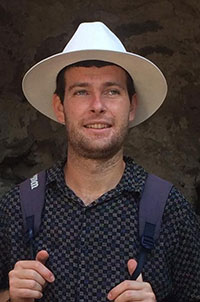 Benjamin Clabault is an American writer from Cape Cod, Massachusetts. Along with his wife and son, he splits his time between Florida and Guatemala. His work appears in After Dinner Conversation, Fiction on the Web, Literary Traveler, and elsewhere.
The Barcelona Review is a registered non-profit organization